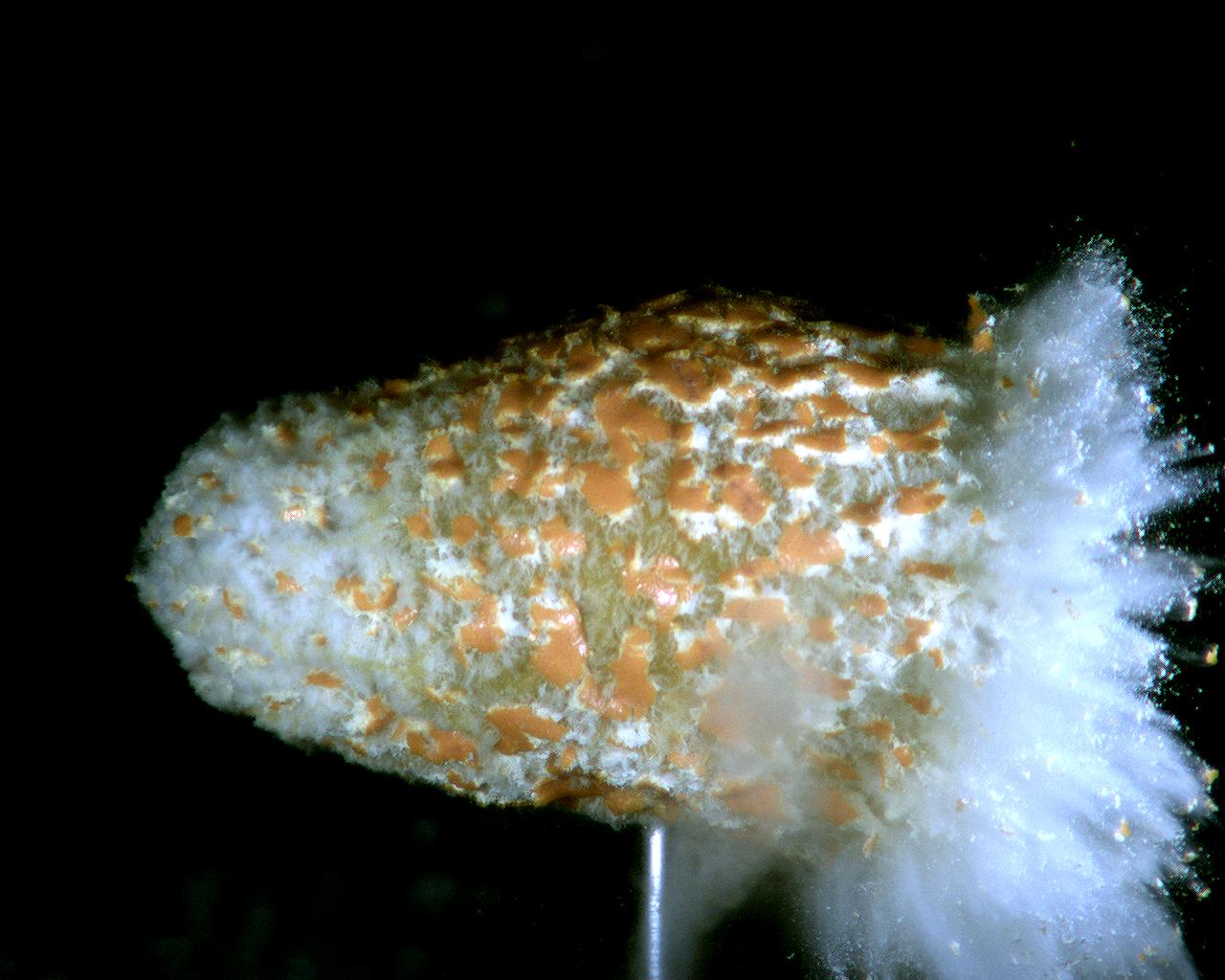
Image of the week, 10/13: Brian Burkard

Image of the week, 10/13: Brian Burkard

Tuesday, October 14, 2014

Extending the Single Photo: Narrative sequence

Please read chapter 7 by Monday, October 20th.

As photographers, the frame is perhaps our most important tool. With the camera, we "frame" our subjects, including what we feel is important for the picture, and excluding what isn't. Essentially, we are editing from the visual world with our frame. A common goal in photography is to try and get it all in one frame—to create a singular image that conveys our full expression, sharp, clear, with a single point of view. 

Further, we capture single points in time,  often orphaned from the longer story. They float, untethered without revealing what came before or after, or for that matter, what else was going on at that time. 

There's value in all this—but it can also be limiting!

Cartier Bresson "The Decisive Moment"

How can we extend the story of a photograph? What happened before our  decisive moment? What happened after? What did the other person see? What about the fly on the wall? Sometimes we need multiple images, multiple frames to convey the breadth and richness of our visual story.

For this phase of the course, we will explore the following modes.

Narrative Sequence
Typology/Series/Multiples
Joiner/Cluster/Panorama
Digital Collage

1. Narrative Sequence

The first assignment is to explore the use of narrative sequence, or visual narrative, to tell some kind of story through time. Think about change and movement...what changes? What moves? What stays the same? How does this change tell a story?

Duane Michals used extended sequences of images to convey complex and (often amusing) narratives. Some of these visual story lines went in a straight lines, sometimes they made bizarre circles and spirals.
Grandpa Goes to Heaven, Duane Michals

Change Meeting, Duane Michals

Countless photographers have borrowed his approach to make narratives of their own.
E.Sariozkan


elodie fougère

The Personal Telling of Story

Jennifer Shaw

New Orleans photographer Jennifer Shaw illustrates the trials her family faced during and in the wake of Hurricane Katrina. The images are told through the use of toys and figurines.

http://jennifershaw.net/hurricane-story/

Metaphoric narrative

The photographer Masaru Goto created a compelling narrative documenting the difficult subject of his mother's sickness, decline and eventual death. He draws a comparison between the life-cycle of cherry trees passing through the four seasons from the blossom stage through the shedding of leaves as extended metaphor for the phases of a human life, from full glory to eventual decline. The result is sad, but poetic and contemplative.

Ideas to get started:

  • Create a character and story...depict this visually, telling the story through a sequence of images. Shoot in a way that links the images together in a coherent way.
  • Choose or stage a sequence of actions and consequences that are related...show us the before, during and after in a compelling way. Even better, throw in a twist or surprise.
  • Illustrate a recent (or current) news event using a fictional or illustrative approach. Instead of photographing the actual events, recreate the event in a compelling or believable way through a sequence of images
  • Take a photo every hour for a day...document what you are doing or seeing. Or what someone else is seeing or doing. What stays the same in every photo? What changes?
  • Same place different time...photograph the same place, the same way, but at a different time...vary by minute, hour, day, week...decide one method and keep it constant
  • Same person different time...photograph the same person, the same way, but at a different time...vary by minute, hour, day, week...decide one method and keep it constant.
Prelim critique: 10/22
Final Critique: 10/27

Monday, September 22, 2014

Expressing Movement


In each of the examples above, how are the images affected by shutter speed? How can creative use of shutter and/or camera movement create different impressions of time and movement?

Use shutter priority. This is "Tv" with Canon, "S" with Nikon. This is an automatic mode where the camera chooses an f-stop based on the shutter speed that you specify, based on available light. 

ISO can also factor in to this exercise. Some guidelines: To freeze a fast moving subject, shoot with ISO 400 or 800 (depending on light available). For long exposures (drag shutter) and panning shots, shoot with the lowest number ISO available, and perhaps shaded light.

Create interesting examples of the following:
  • Create the impression of blurred moving object passing across a stationary background with a slower shutter speed (drag shutter). Try 1/30. Make sure camera is as stable as possible, using lens stabilization, if you have it.
  • Freeze a fast moving object with a fast shutter speed, 1/500 second or faster
  • Track a moving subject across a background, with 1/2 to 1 second exposure, creating a PAN shot. For this shot, use a very low ISO, high f-stop, and shoot in deep shade.
  • Try a very long shutter speed to create overall blur. For this shot, use a very low ISO, high f-stop, and shoot in deep shade.
Suggestions: For all of the above...have all motion occur across the frame rather than coming directly toward or way from the camera. Also, get in close to the subject so that the sense of motion fills the frame.

How creative can you be with these examples? Originality will be rewarded!

Tuesday, September 16, 2014

Project 1: Images in a theme.


Project 1: Images in a theme.

Using your continually developing skills as a photographer, create a concise group of images closely related to a subject/theme/idea. The images should be well exposed, well composed, well selected, and properly processed in Photoshop. Plan to turn in a group of the strongest images from the many that you shoot.

Themes may be fictional, personal, political, documentary, visual, or aesthetic...up to you, but theme should be concise and meaningful. No cute pet pictures, beer cans, flower gardens or similarly trite subject mater, please.

Due dates:
9/29, preliminary critique
WEDNESDAY 10/8, final critique, REVISED

Plan to turn in:
  • 7 files, processed (using image processor) to 1200 pixels by the longest side, jpeg quality 10 or higher
  • 2 of the above images as LAYERED photoshop files, 1200 pixels by the longest side, to demonstrate photoshop skills 
  • 3 high quality prints, using an inkjet printer, with correct color management. These prints should be created from your full resolution master files, rather than the 1200 pixel screen files
Work will be evaluated on:
  • Conceptual: The quality and development of central theme or idea
  • Conceptual: How well the theme is expressed through images
  • Aesthetics: Quality of images (composition, lighting, depth of field, point of view)
  • Technical skills: (camera, photoshop, printing)
  • Adequate development of project from start to finish

Wednesday, September 10, 2014

Subject matter versus meaning

Merely capturing a subject does not automatically convey its meaning, or content.

For example, a photographer who claims to "like photographing people," is saying very little specific about what they are really trying to communicate. Yes they are showing something, but they are communicating little.

The clearer the idea you have about what you hope to communicate, the more clearly your photographs will communicate this idea meaningfully.

If this photographer who "likes photographing people" instead asks him or herself the following questions:

  • Who are these people?
  • What are they doing?
  • Where are they?
  • Why?
  • What difference does it make?
  • What story do they/I have to share? 
  • How can this be shown/created/expressed?
...they will have a much better experience with creating and communicating meaning.

Assignment:

  1. Select a subject that you are commonly drawn to. Person, place, thing. No animals or pets, for now. 
  2. Apply the above questions
  3. Create images that answer the questions, visually
For Monday, 9/15. 

Tuesday, September 2, 2014

Reading and Class Discussion

Wednesday 9/10

Read Chapters 1, 2 and 3 in the textbook, Light and Lens.

Prepare discussion points for the following:

Chapter 1: From the history of photography described by the author, please choose a historic "movement" or approach to the medium that personally resonates with you. Be able to explain how this is pertinent to you as a photographer. Where might you go with this inspiration?

Chapter 1: Read pages 18-30. Pick at least 2 question/answer combinations that you resonate with the most (in a positive way). Then pick 1-2 that you agree less with. Be prepared to discuss your reasoning in class.

Chapter 3: Generate 1-2 points about camera technology from the reading that you found intriguing, or have a question about. Be prepared to discuss.

Making color the subject

Field trip exercise:

Create a set of images, where you are exclusively looking for color. Let color itself be the subject. At first, keep it simple, limiting yourself to one color. Relax and simply respond to the perceptions that grab your attention. Get close and use your frame to isolate the color. Do all "cropping" in camera at the time of shooting. Eliminate all distracting elements that detract from the main subject of color.

Avoid flowers, for now!


Depth of Field

Field trip / homework exercise:

Deep depth of field. Achieve with small aperture and/or wider angle lens.

Shallow depth of field. Achieve with wide aperture and/or longer (telephoto) lens.

In class:

Explore depth-of-field using Aperture Priority Mode. 

Nikon: use "A" mode
Canon: use "Av" mode

The photographer chooses the aperture and the camera automatically adjusts shutter speed for optimal exposure.

Shoot in fairly bright conditions to ensure adequate exposure, or use higher ISO. Create a photograph where there is a distinct foreground object and the background is fairly far away.  Focus on the foreground object, and maintain this focal placement. Shoot the image three times, varying the apertures. Create at least 3 3-image sets.
  • f4 or wider (f2.8, f1.4 okay)
  • f8
  • f16 or smaller (f22 okay)
Shooting (for Monday 2/2)

Chose specific subjects and shoot them with widely varied depths of field, while maintaining the same composition/framing. This means 2-3 variations of the same "shot" but created with a range of apertures to vary the depth of field. Again, shoot on aperture priority

In the examples below, we see the same subject and the same framing, but with different depths of field. How does this affect the image? Which do you prefer? Why?

f4.0

f18